A gentle, seven-day journey through the change — daily flows, breath work, nourishing food, simple lifestyle shifts and affirmations to help you move through perimenopause with strength, softness and ease. No experience needed. Just you, your breath, and a little space on the floor.
Perimenopause is not an illness — it is a passage. For a few years before your periods finally stop, your hormones rise and fall like tides, and your body, mood and sleep can feel like they belong to someone else. It can be confusing. It does not have to be lonely.
This course gathers everything I share with the women I teach — gentle movement to keep your bones and muscles strong, breath to cool the heat and calm the mind, food you can find in your own kitchen, and words to speak to yourself with tenderness. Seven short days to build a practice you can carry for the rest of this season of life.
You are not losing yourself. You are becoming more yourself.
Perimenopause is the natural transition leading up to menopause — the years when your ovaries gradually make less oestrogen. It often begins in your early-to-mid 40s (sometimes the late 30s) and lasts, on average, about four years — though for some it is a few months and for others closer to a decade.
You remain in perimenopause until you have gone a full twelve months without a period. That single milestone is menopause itself; every day after is post-menopause. So menopause is one day — perimenopause is the whole journey towards it.
Because oestrogen and progesterone rise and fall unevenly before they settle, symptoms come and go. Common signs: irregular or changing periods, hot flushes, night sweats, broken sleep, mood swings, anxiety or low mood, brain fog, fatigue, aching joints, drier skin, lower libido, and weight that gathers around the middle. As oestrogen falls it also affects bone density and heart health — which is exactly why movement and care matter now.
Yoga will not stop the tide, but it steadies the boat — calming the nervous system, easing stress hormones, supporting sleep and mood, keeping joints supple and bones strong, and gently reuniting you with a body that may feel unfamiliar.
Movement matters more now than ever. A weight-bearing flow protects your bones, builds the muscle that naturally slips away with falling oestrogen, and moves stagnant energy so mood and circulation lift. But this is not about pushing — it is gentle and breath-led. Each breath leads each movement.
Move slowly. Let the inhale lengthen you and the exhale soften you. If you feel heat rising, slow the pace and lengthen your out-breath. Use a block under your hands in standing poses, and keep a wall nearby for balance. Today's flow runs a full 45–50 minutes — give yourself the whole arc, from warm-up to deep rest.
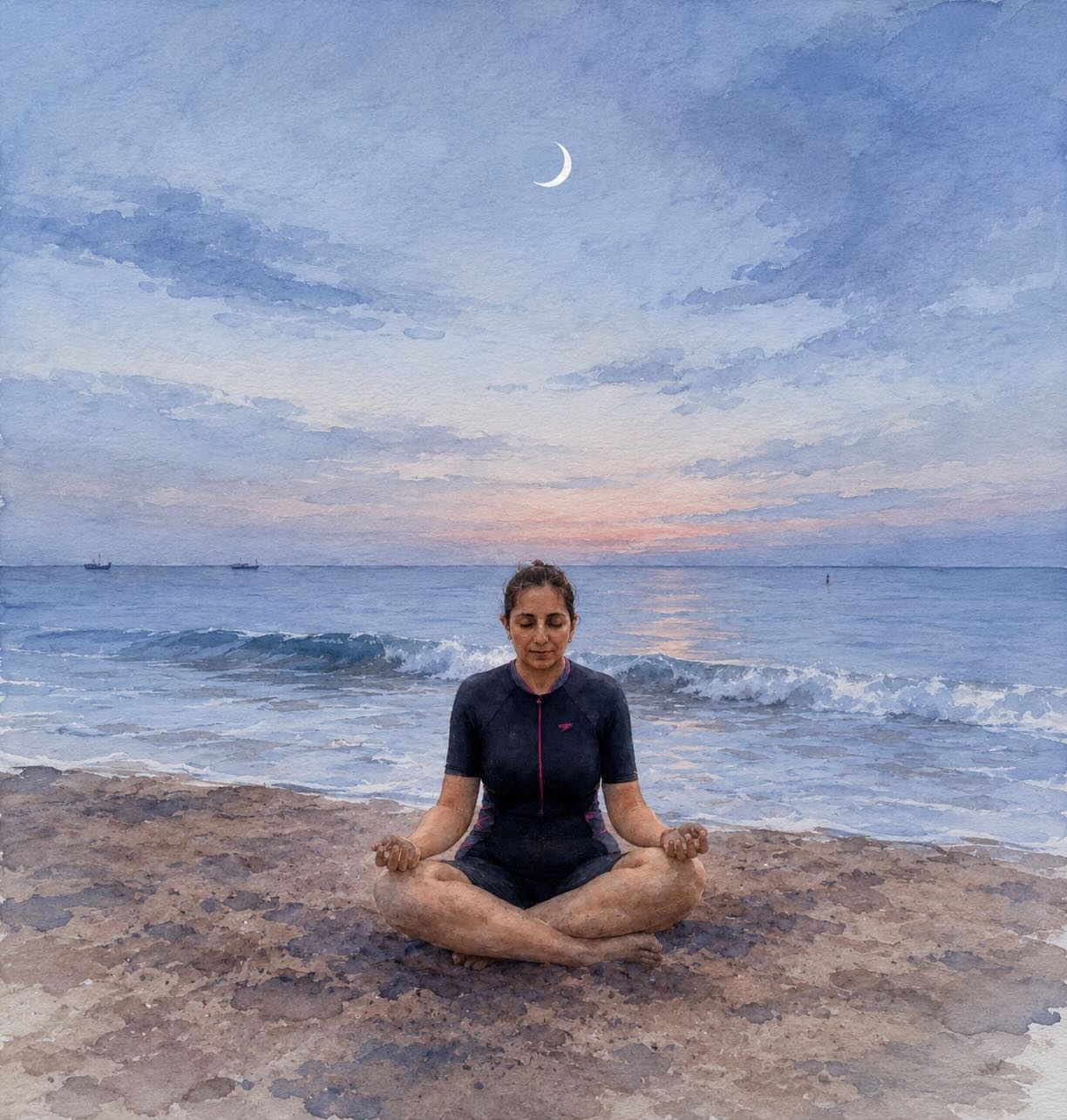
Pair the movement with steady Ujjayi (ocean) breath — a soft hush at the back of the throat, in and out through the nose. It warms the body, holds your focus, and turns the flow into a moving meditation.
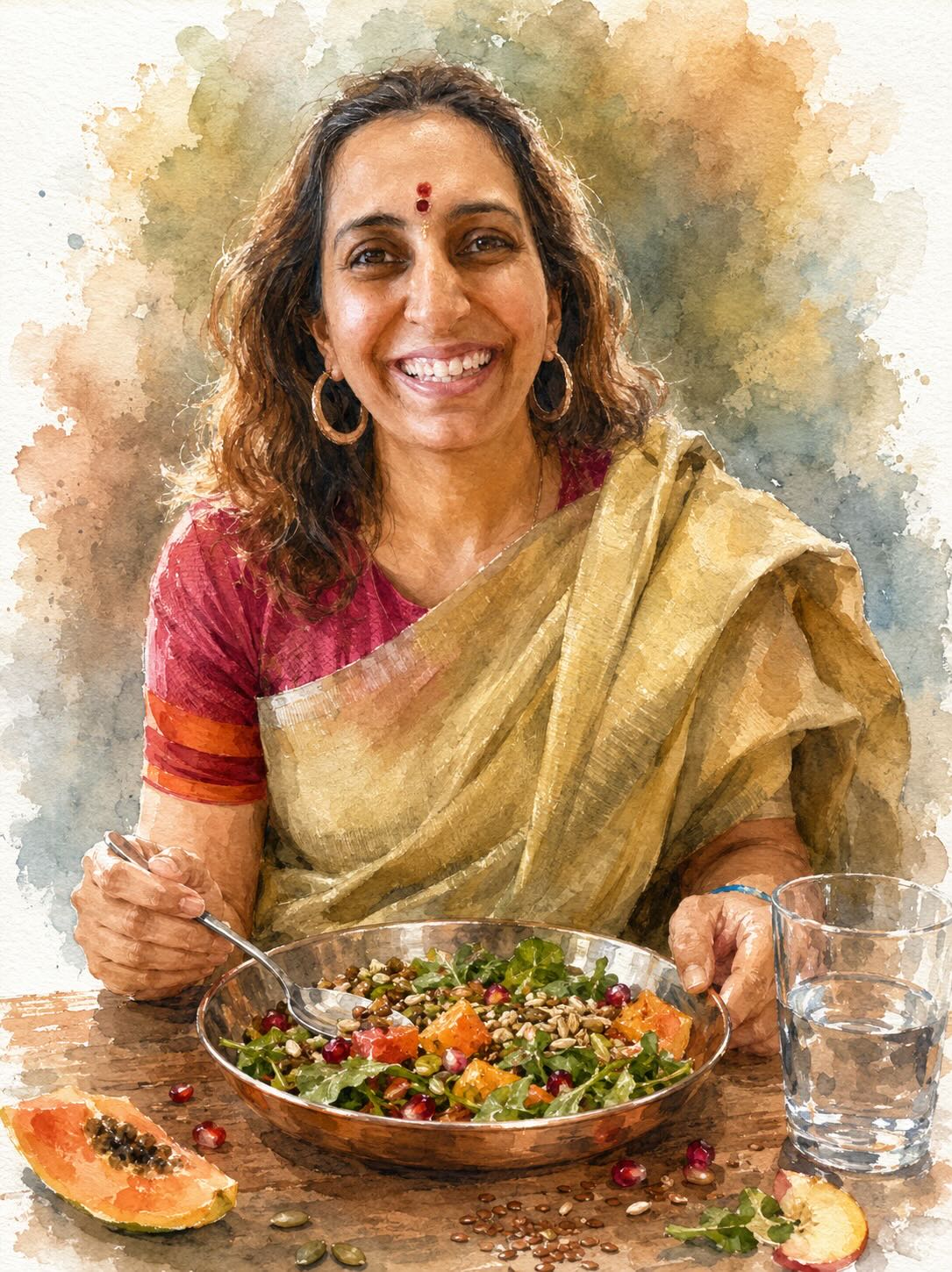
What you eat can genuinely soften this transition — and it need not be expensive or imported. The best foods for perimenopause are often already in your kitchen.
Gently ease off the common flush-triggers: excess caffeine, alcohol, refined sugar and very spicy food. The simple rule — eat a rainbow, eat whole, eat at regular times.
Fluctuating hormones reach the brain too — irritability, anxiety, sudden tears and brain fog are real, common, and not your fault. A few small, steady lifestyle shifts give the mind firmer ground:
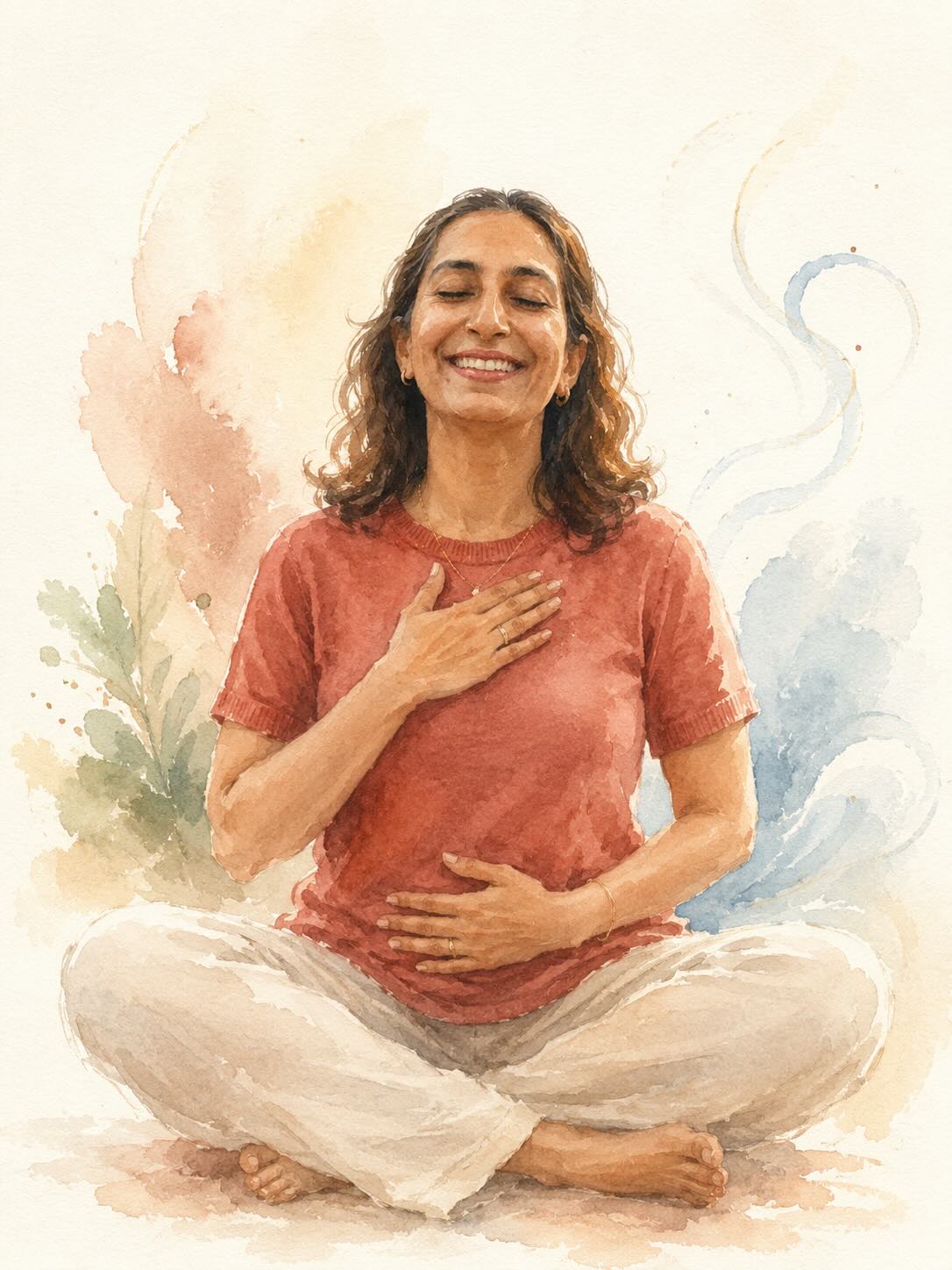
The mind believes what it hears most often. Spoken daily, affirmations gently rewrite the inner story — from "something is wrong with me" to "I am changing, and I am whole." Pair them with slow breath so they land in the body, not just the head. Place a hand on your heart, breathe, and say the words as if to a dear friend — because you are.
Sleep is often the first thing perimenopause disturbs — night sweats, a racing mind, the 3 a.m. waking. Your breath is the most powerful, free sleep tool you own. Long, slow exhalations switch on the body's "rest-and-digest" mode, slow the heart, cool the body and quiet the thoughts.
And it works both ways: breathing well through the day changes how you feel — calmer mood, clearer head, steadier energy — and how deeply you sleep at night. A good day and a good night feed each other.
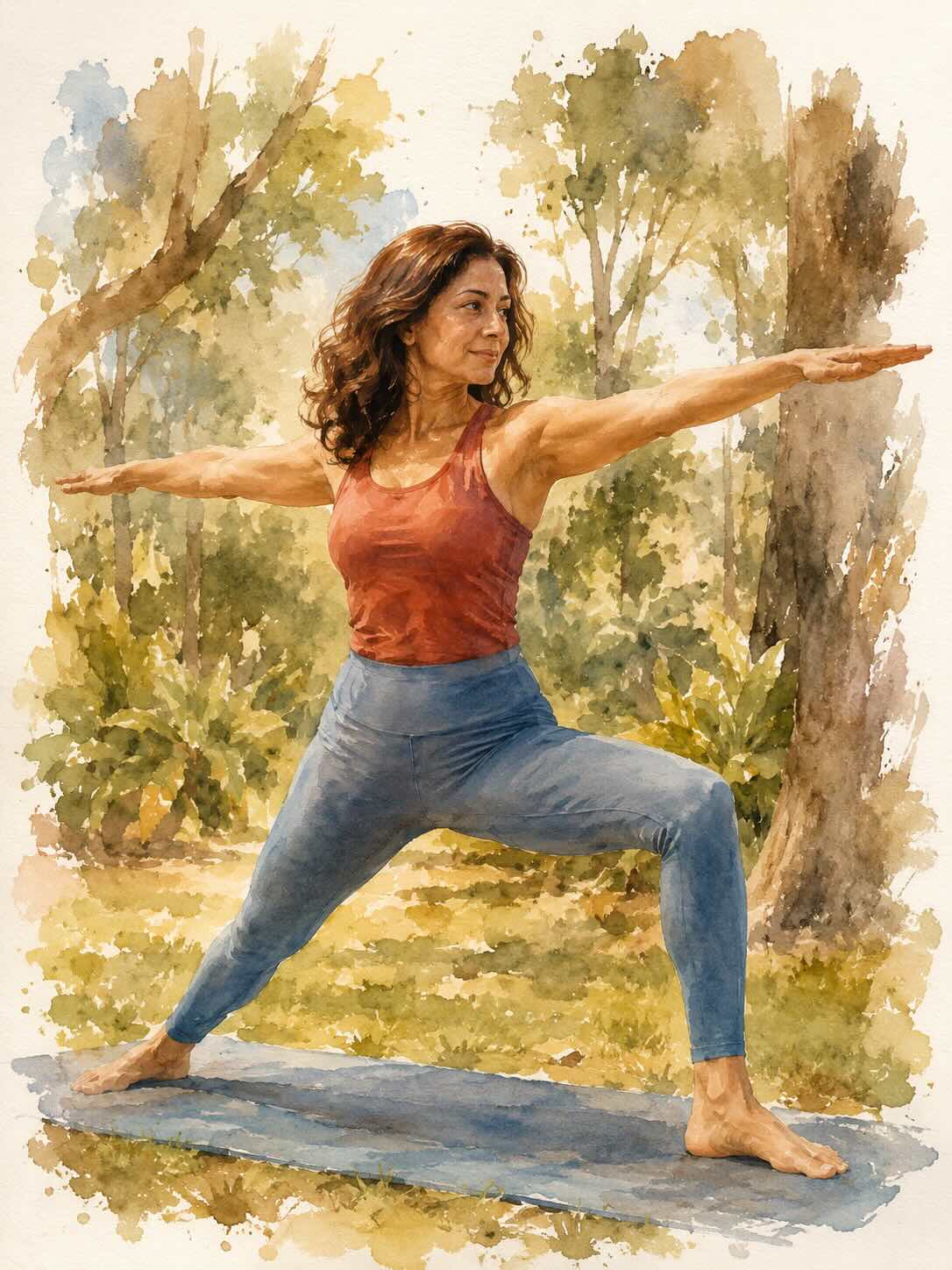
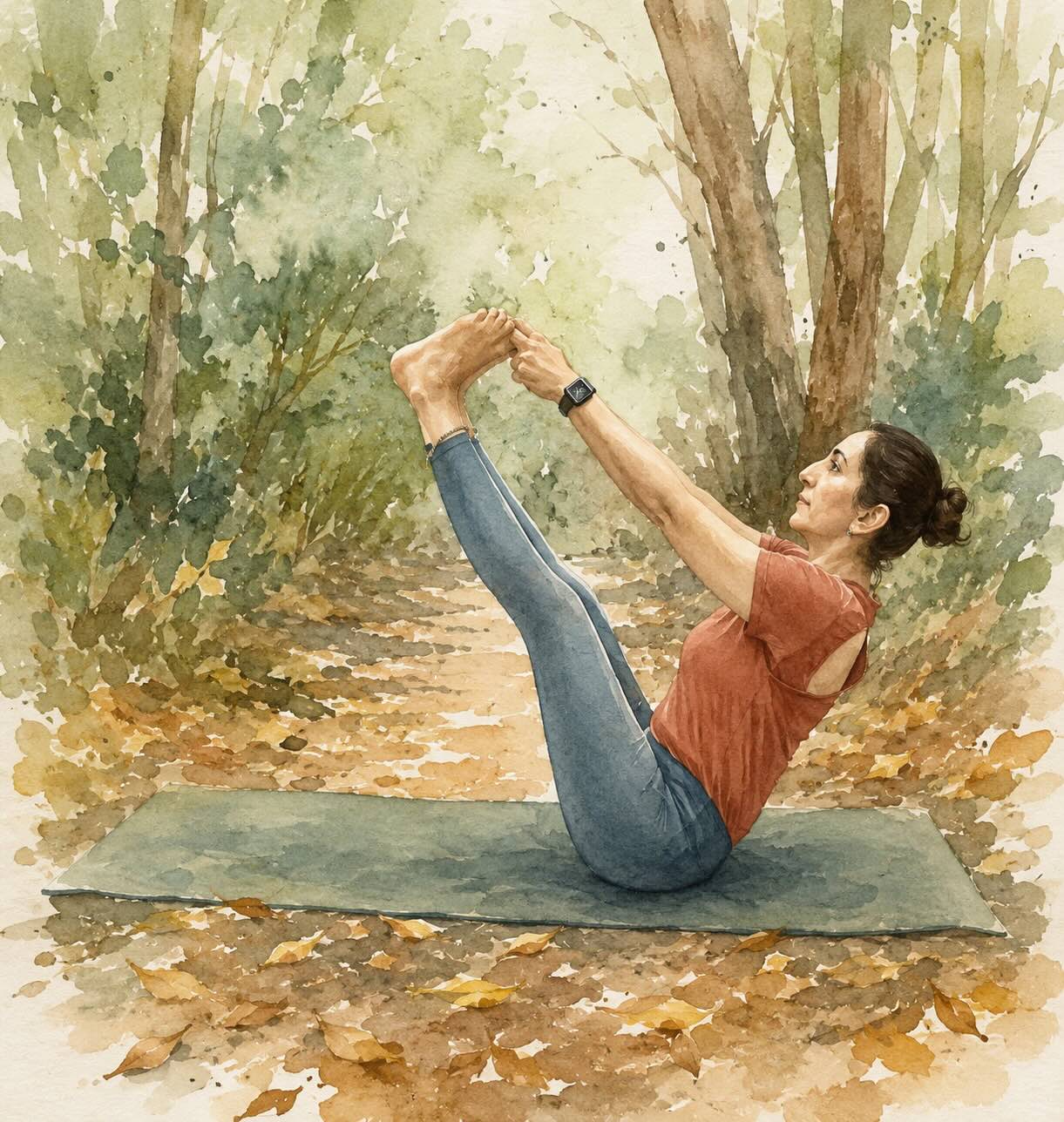
As oestrogen falls, bones thin and muscle is lost more easily — so this is the season to build strength, not shrink from it. Weight-bearing standing poses and balance work protect your bones, joints and independence for decades to come. Strong women age well.
Hold the poses a few breaths longer than feels easy — that gentle effort is what signals your bones and muscles to stay strong. Keep a wall or chair close for balance, and let your breath stay steady even as the legs work. Strength here is kindness to your future self.
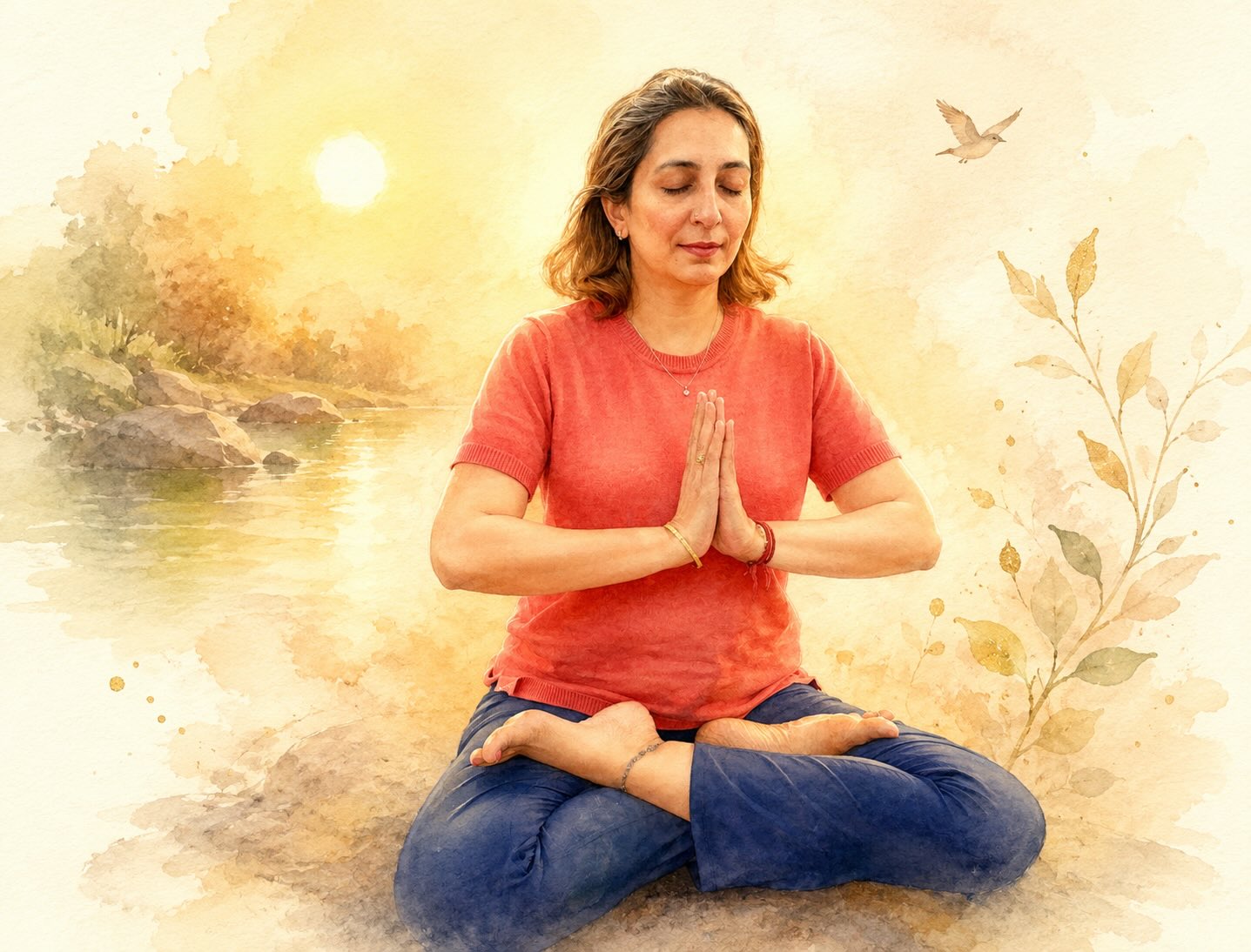
A short practice done daily beats a long one done rarely. From everything you have tasted this week, keep a simple 10–15 minute ritual that leaves you relaxed, lifts your mood, and helps you wake up refreshed. Do it most mornings, or each evening — whichever your life allows.
Some days you will move through all of it; some days just three slow breaths. Both count. Consistency, not perfection, is what carries you gently through the years ahead.
This is not the ending of your vitality — it is a doorway. Move with intention, eat with kindness, breathe through the heat, rest without guilt, and speak to yourself softly. You have everything you need.
Keep this close — simple, local, affordable ways to support your body through perimenopause, beyond the mat.
Plant compounds that gently echo oestrogen and steady the swings.
Calcium and vitamin D protect bone as oestrogen declines.
Magnesium and omega-3 ease anxiety and help you rest.
Hydrating, cooling foods take the edge off hot flushes.
Some protein at every meal keeps you strong and steadies energy.
Common triggers for flushes, broken sleep and mood dips.
Eat a rainbow. Eat whole. Eat at regular times. Move daily. Rest deeply.
For nearly two decades, Sripriya has lived this practice — and for the past ten years she has walked beside women through real transformation, in body and in mind. Her roots are in prenatal and postnatal yoga, and today she also guides people through menopause, back trouble and other health challenges, meeting each person just where they are.
When the world moved indoors, she found she could reach far more people online — and made that her home, teaching students wherever they are. Her work is personal by design: one-to-one classes, coaching and trainings shaped around a single body and life.
Her way is gentle and unhurried — breath and pranayama, mudra, and movement that is authentic rather than performed. Her mission is quiet but deep: to create lasting change in the mind, and to touch one life at a time.
With you, one breath at a time. — Sripriya
A gentle note. This course is offered for general wellbeing and education and is not medical advice. Every body and every perimenopause is different. Please see your doctor for severe symptoms, very heavy or unusual bleeding, or before beginning any new exercise — especially if you have a health condition, an injury, osteoporosis, or are pregnant. Move within your own comfort, and stop if anything causes pain.
This guide is yours to read freely. When you're ready to be guided — seven days of live practice shaped around your own body and symptoms, online wherever you are — join the full program.
Have a question first? Message me — happy to help you decide.